
Depth Pitch News

Three identified in arson attack on DUCSU VP's Khagrachhari home

Police have identified three of the four suspects allegedly involved in an arson attack and petrol bomb throwing at the Khagrachhari residence of Sadik Kayem, vice-president (VP) of the Dhaka University Central Students' Union (DUCSU), after analysing CCTV footage.Officer-in-Charge of Khagrachhari Sadar Police Station Md Kay Kislu confirmed the incident, saying all four individuals involved were affiliated with the now-banned Bangladesh Chhatra League. Police have launched operations to arrest those involved.In connection with the incident, Sadik Kayem's father, Abul Kashem, filed a case naming seven individuals, including the three suspects identified by police.The identified suspects are Md Munna and Saif, both residents of North Sabujbagh in Khagrachhari Sadar, and Omar Faruk from Dighinala upazila. Police are working to identify the fourth individual seen in the CCTV footage.Teams from the army, police and other administrative agencies visited the scene on Sunday morning.The attack took place at around 3:30 am on Sunday at Kayem's family home in Nayanpur, Khagrachhari Sadar. The attackers allegedly threw petrol bombs and poured kerosene around the house in an attempt to set it on fire.However, residents and neighbours managed to extinguish the flames before they spread, preventing major damage and protecting Kayem's parents and sister, who were inside the house at the time.Abul Kashem said he heard a loud noise on the rooftop in the early hours and tried to leave the house, only to find flames spreading around it. Hearing his cries for help, neighbours rushed to the scene and put out the fire with water.Mukul Kumar Nath, station officer of Khagrachhari Fire Service, said the fire was brought under control with the assistance of local residents.In a Facebook post following the incident, Sadik Kayem alleged that leaders and activists of the banned Awami League had thrown petrol bombs around his house. He also claimed that the attackers poured kerosene in front of the entrance and set it on fire in an attempt to burn down the entire house.In the same post, Kayem further alleged that the Awami League was attempting to regain political relevance through attacks, threats, and intimidation targeting students and members of the public who supported the July movement.
Army provides safe drinking water to marginalised community in Lakshmichhari

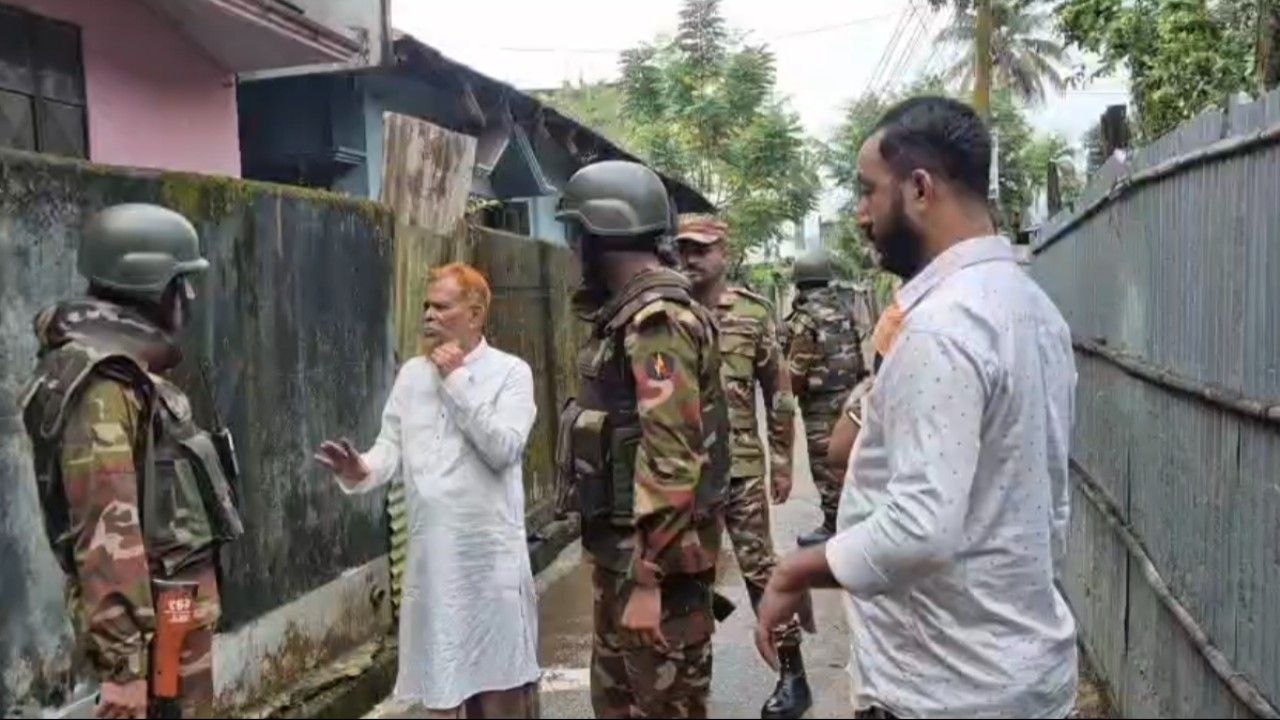
The Bangladesh Army has installed a water tank to provide safe drinking water to residents of Santal Para in Lakshmichhari upazila of Khagrachhari, where access to clean water remains a challenge due to the area's difficult terrain and limited electricity supply.Alongside its operational activities in the Chittagong Hill Tracts, various zones under the Army's 24 Infantry Division carry out humanitarian initiatives, according to the report.In remote hill areas, the lack of electricity often makes it difficult to extract water from deep tube wells. Against this backdrop, the Lakshmichhari Zone under the Guimara Region has installed a water tank connected to a deep tube well for residents of Santal Para, which falls under the Baniyachhara Army Camp.The initiative has provided access to safe drinking water for more than 60 people from the Santal community who previously lacked adequate facilities.On Wednesday morning, the commander of Baniyachhara Army Camp formally handed over the water tank to the beneficiaries.Officials concerned said the initiative was undertaken under the overall guidance of Lieutenant Colonel Khan Sajibul Islam, commander of Lakshmichhari Zone. They added that similar initiatives would continue in remote hill communities in the future. Local representatives and residents expressed their gratitude to the army for the initiative.
Army provides safe drinking water to marginalised community in Lakshmichhari

Ziaur Rahman Laid Foundation for Mainstreaming All Ethnic Communities: Saching Prue

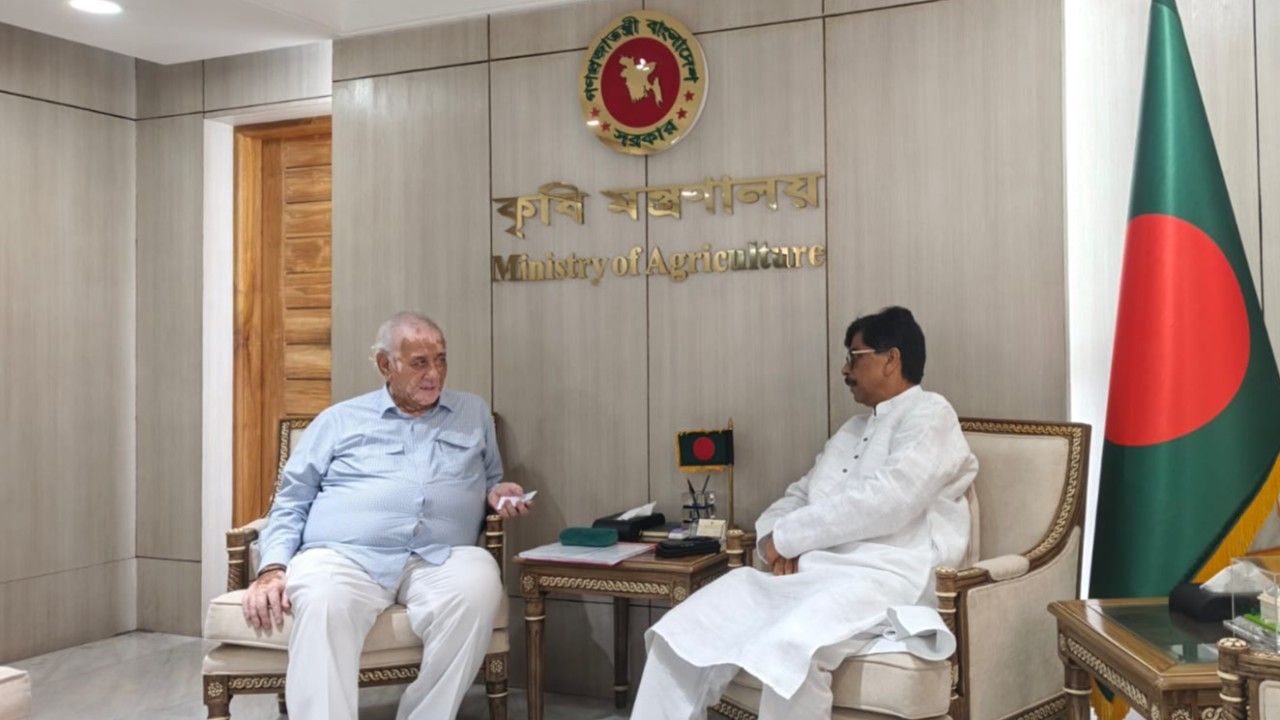
Chittagong Hill Tracts Affairs Minister and Bandarban prince Saching Prue Jerry, MP, has said that Shaheed President Ziaur Rahman, a proponent of multiparty democracy and an architect of modern Bangladesh, laid the historical foundation for bringing ethnic communities from every corner of the country into the national mainstream through the ideology of “Bangladeshi nationalism”.He made the remarks as the chief guest at a special exchange of views with representatives of plainland ethnic communities and the Bangladesh Nationalist Ethnic Groups Party at the seminar hall of the Chittagong Hill Tracts Complex on Bailey Road in Dhaka on Saturday.Saching Prue said the government of Prime Minister Tarique Rahman was committed to protecting the languages and cultures of ethnic communities, expanding access to modern education and ensuring improved living standards for them, regardless of whether they lived in the Chittagong Hill Tracts or the plains.Praising Prime Minister Tarique Rahman’s leadership, the minister said they were working towards building a prosperous Bangladesh by embracing the significance of the “Rainbow Nation” concept and pursuing the prime minister’s vision of an inclusive government free from discrimination.He also respectfully recalled the contributions of former Prime Minister Khaleda Zia to education, healthcare, socioeconomic development, culture and the overall social advancement of communities in both the hill districts and the plains.Addressing the proposals and demands raised by the Bangladesh Nationalist Ethnic Groups Party delegation, Saching Prue said the government was fully aware of the problems highlighted by the representatives.“This meeting is not merely a formality; rather, it reflects the Prime Minister’s ‘Rainbow Nation’ vision,” he said.The minister added that the proposals submitted by the delegation were being considered seriously. The Ministry of Chittagong Hill Tracts Affairs and the relevant government agencies would sincerely consider the necessary steps to implement the legitimate demands put forward by the representatives, he said.During the meeting, representatives of plainland ethnic communities highlighted various challenges concerning their livelihoods, education, cultural preservation and land-related issues.The minister listened to their concerns and assured them that dialogue between the government and ethnic communities would continue in the future.The meeting was chaired by Mrigen Hagidok, president of the Bangladesh Nationalist Ethnic Groups Party and the plainland ethnic communities’ organisation. Among others, the party’s general secretary, Shishir Dio, and its senior leaders also spoke at the event.
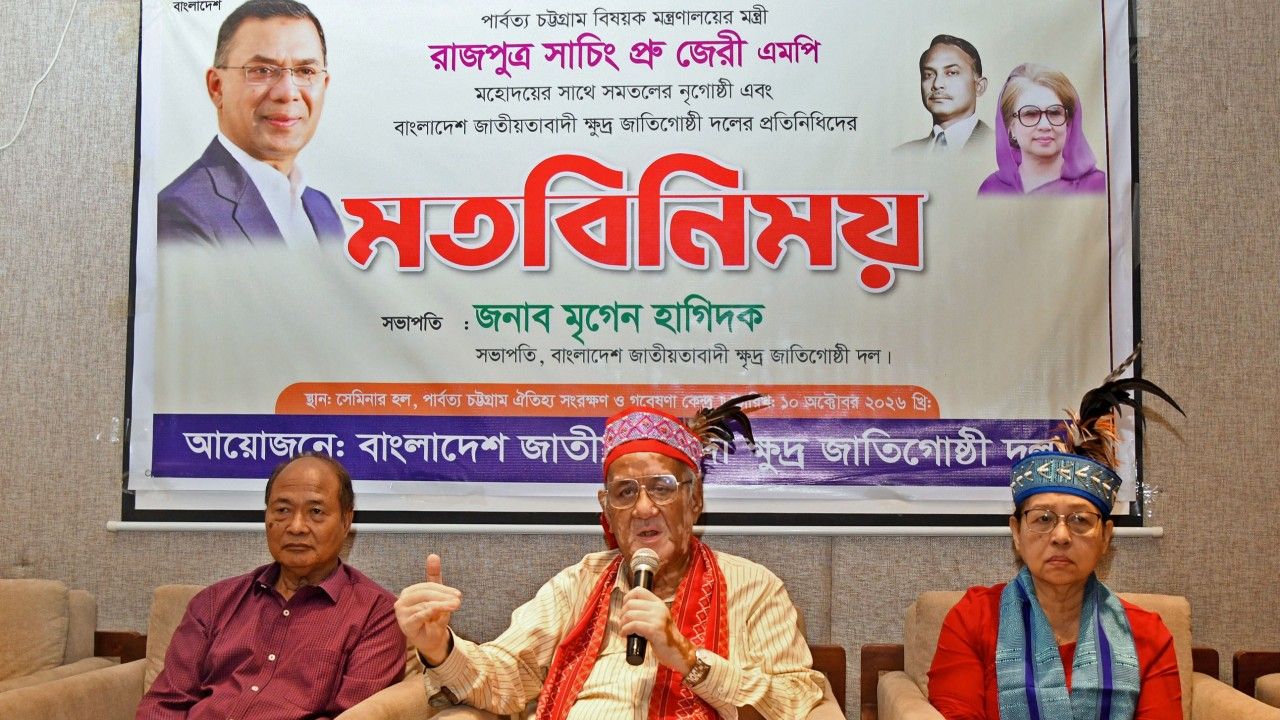
Ziaur Rahman Laid Foundation for Mainstreaming All Ethnic Communities: Saching Prue
No Post!
No Post!

Sajek Tourism Faces Major Losses Amid Alleged U​​P​​D​​F-Led Road Blockade

Tourism, after agriculture, is a key driver of the economy in the Chittagong Hill Tracts (CHT). However, allegations have emerged that the United People’s Democratic Front (UPDF) is disrupting tourism-related economic activities in Sajek Valley, Rangamati, by mobilising locals for a road blockade.  The disruption comes ahead of the Durga Puja holidays, when tourism businesses in Khagrachhari and Sajek were expecting transactions worth at least Tk 10 billion, according to a leader of the Sajek Cottage Owners’ Association. The blockade has raised concerns over potential financial losses for transport operators, cottage owners, restaurants and thousands of local people who depend on tourism for their livelihoods.On Sunday, October 11, hundreds of tourists were reportedly stranded in the Uzobazar area of Sajek Union during a road blockade that lasted from 6 am to 4 pm. Police and local administration officials, led by the Bangladesh Army, managed the situation. The blockade was suspended for 48 hours after law enforcement agencies reportedly assured those present that action would be taken against armed individuals.Interviews with people who took part in the blockade, along with on-the-ground observations, suggest residents in several villages faced pressure to join the programme.Two local karbaris—traditional community leaders—spoke to this correspondent on condition of anonymity, saying they had been compelled to mobilise villagers.“We are karbaris only in name. We are held hostage by them. We were told to bring 20 to 30 people from our villages. If we failed, we would have to answer for it. Fearing retaliation, we gathered people early in the morning and brought them here. Nobody came here of their own free will,” one of them said.The sources alleged that armed members of the UPDF had been conducting patrols in different villages of Sajek Union over the past week and warning residents to join the blockade when instructed. They also said local karbaris had been made responsible for ensuring attendance.The blockade was initially announced for an indefinite period under the name of the Gana Adhikar Rakkha Committee, before being suspended after several hours. The allegations that the UPDF (Prasit faction) was behind the programme could not be independently verified.News of the blockade circulating on social media has reportedly fuelled anxiety among tourists. Businesses in Sajek have begun facing cancellations of hotel and resort bookings ahead of the extended Durga Puja holidays, raising fears of a sharp downturn in tourism.The disruption is also affecting the local transport sector, cottage businesses and restaurants. An administrative notice issued by the Rangamati authorities has added to concerns among tourism operators, although the specific contents of the notice were not detailed by the sources interviewed for this report.Several transport workers said a suspension of vehicle movement on the Sajek road during the holiday period would cause substantial financial losses for owners and drivers. Vehicles operating on the route largely depend on tourist traffic to and from Sajek, they said.“If tourists stop coming, we will be left completely unemployed,” one transport worker said.Thousands of local people rely on tourism-related work for their livelihoods. Entrepreneurs and workers in the sector said they had been worried since Saturday as uncertainty grew over whether the blockade would disrupt holiday travel.A Sajek cottage owner alleged that the blockade had been called to consolidate regional armed influence and serve the UPDF (Prasit faction)’s interests. The owner said prolonged disruption would undermine the tourism industry, which has become an important source of economic opportunity in the hills, and severely affect the social and economic lives of local business owners and residents.A leader of the Sajek Cottage Owners’ Association said tourism-related transactions in Khagrachhari and Sajek were expected to reach at least Tk 10 billion over the Durga Puja holidays.The leader said ordinary people from both the hill communities and the Bengali population were bearing the cost of the disruption. The leader called for swift and effective measures to protect tourism, maintain stability, and prevent further economic losses in Sajek.

No Post!
No Post!
No video!
No video!
No Post!
No Post!
No Post!
No Photos!
No Photos!
380 Marginal Families to Get Safe Water and Sanitation

380 Marginal Families to Get Safe Water and Sanitation

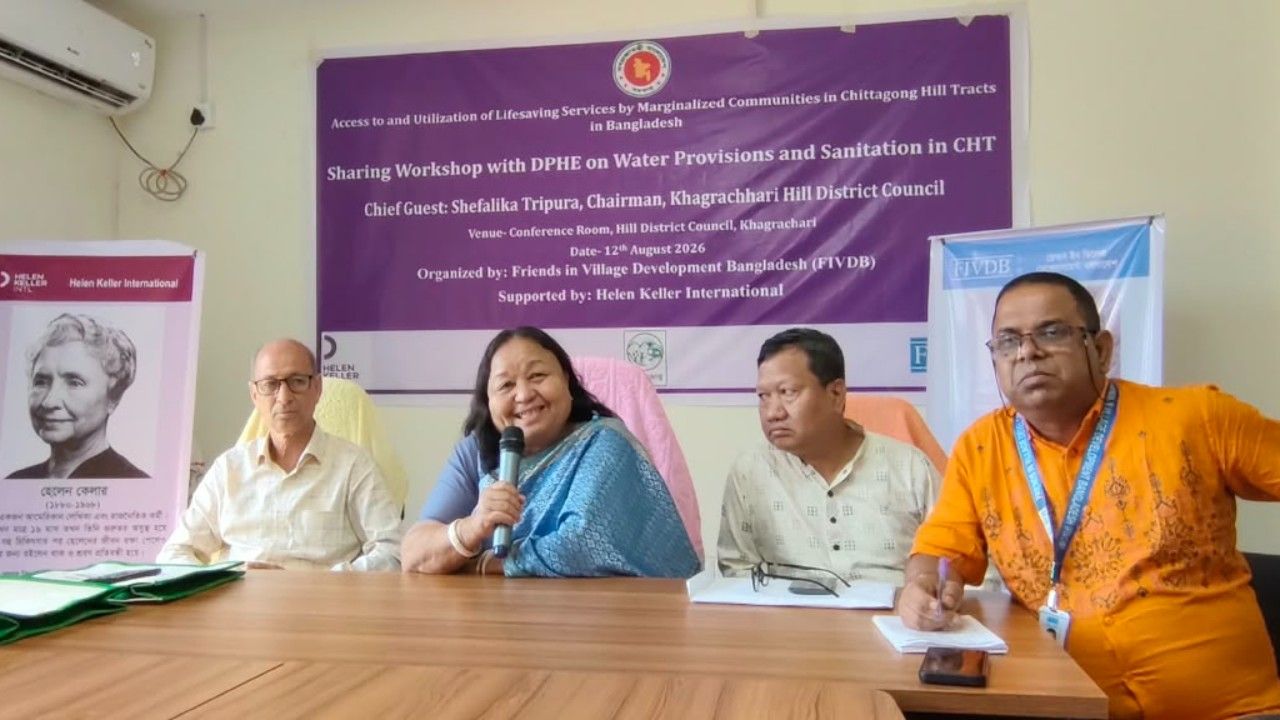
380 Marginal Families in Khagrachhari to Receive Climate-Resilient Latrines and Safe Drinking WaterA total of 380 families from marginalized communities in Khagrachhari Hill District will receive climate-resilient, sustainable latrines and access to safe drinking water.A consultation workshop on the initiative was held on Wednesday (August 12) at the conference room of the Khagrachhari Hill District Council. The workshop was organized under the project titled “Access to and Utilization of Lifesaving Services by Marginalized Communities in Chittagong Hill Tracts in Bangladesh.”The project is being implemented by Jabarang Kalyan Samiti with support from Helen Keller International, while Friends in Village Development Bangladesh (FIVDB) is providing technical assistance and organizing the workshop.The workshop focused on improving access to and use of lifesaving services among marginalized communities in the Chittagong Hill Tracts, as well as providing safe drinking water and climate-resilient latrines to families of children suffering from moderate and severe malnutrition.Khagrachhari Hill District Council Chairman Shefalika Tripura attended the workshop as the chief guest. Mathura Bikash Tripura, executive director of Jabarang Kalyan Samiti, chaired the event.Participants exchanged experiences and views on access to lifesaving services, safe water supply and sanitation facilities for marginalized communities in the hill region.The session was moderated by Binodon Tripura, project coordinator of Jabarang Kalyan Samiti. Engineer Aniruddha Sarkar, Khagrachhari representative of FIVDB, gave a PowerPoint presentation outlining the proposed locations, technical designs, implementation methods and estimated costs for installing water supply facilities and climate-resilient latrines.Following the presentation, FIVDB WASH Manager Randhir Kumar Das responded to questions from the chief guest, special guests and participants. The participants also put forward several practical suggestions and recommendations aimed at achieving the project's objectives.The organizers said coordination and effective joint initiatives among relevant institutions were essential to ensuring access to lifesaving services, safe drinking water and hygienic sanitation facilities for marginalized communities in the hill region.In her speech, Chief Guest Shefalika Tripura advised the project authorities to maintain close communication and coordination with the upazila-level representatives of the Department of Public Health Engineering (DPHE) while implementing the project. She also urged the authorities to take into consideration the technical recommendations provided by DPHE representatives.In his speech, K.M. Sayeed Mahmud, executive engineer of DPHE in Khagrachhari, thanked Helen Keller International Bangladesh for funding such a major project for the district and FIVDB for coming forward to provide technical assistance.He also thanked FIVDB for involving DPHE at different stages of the project and finalizing the designs after seeking technical advice from the government department. In his concluding remarks, Mathura Bikash Tripura, executive director of Jabarang Kalyan Samiti, stressed the need to avoid duplication of activities and ensure close coordination with DPHE throughout the implementation of the project.

No Post!
No Post!
No Post!